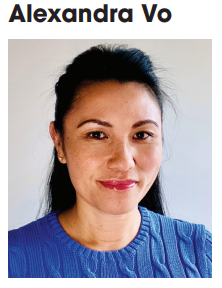
 Have you heard of COP27, the 27th annual climate change conference that took place in Egypt? Alexandra Vo was just there in November as the UN Representative for FAWCO, an international charitable organization focused on bettering the lives of women and children.
She will summarize the major climate change topics and outcomes and show what happened behind the scenes. Alexandra will talk about the process, the global and local issues, and the funny and not-so-glamorous parts about being a delegate. Learn how she got a coveted ticket to see President Biden speak and why she kept bumping into US Special Envoy John Kerry and US Congresswoman Pelosi. She was at the center of protests that made it onto the Guardian newspaper, heard Swahili morning blessings, and attended many discussions including those on Indigenous People, mental health, and food supply.
There will be lots of photos! You’ll come away better informed to converse with your friends and family about the state of our planet.
Alexandra Vo is a member of the Larchmont Rotary Club. She is currently the United Nations Liaison for FAWCO. She attends the annual UN Commission on the Status of Women and the UN Climate Change Conferences to advocate for environmental and human rights concerns. She was a Vietnamese refugee who came to the US as a boat person at the age of 6. She has lived in Paris and is fluent in French. Before moving to New York, she lived in the Boston area. She received a BA in Philosophy from Yale University where she met her husband on the fencing team. Luckily, they fenced different weapons so they never had to meet in combat. They have 2 children.
City Island Oyster Reef
City Island Oyster Reef (CIOR) began when concerned members of the community joined together to explore the possibility of restoring oysters to our local waterways, not for consumption but for the significant role that oysters could play in improving the marine environment around City Island.
Our long-term goal is to restore oyster reefs around City Island in order to improve water quality, protect the shorelines against storm surges and flooding, and attract the hundred or more species historically associated with the area.
The mission of the City Island Oyster Reef is to restore the western Long Island Sound ecosystem in order to improve biodiversity, water quality, and coastal resilience by creating reefs of shells to encourage the population growth of the historically abundant oyster and other marine species around City Island. CIOR is building community awareness, promoting active stewardship, developing educational programs, collecting and sharing scientific data, promoting and supporting research, and collaborating with like-minded organizations to achieve this mission.
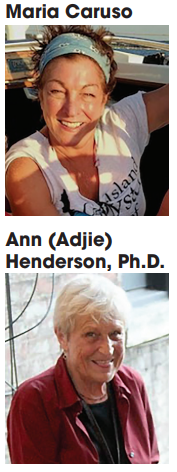
Maria Caruso, a luxury travel consultant specializing in eco-tourism for the past 39 years, has been a resident of City Island for nine years. She has served as the Director of Tourism for the City Island Chamber of Commerce since 2012, and in 2016, she accepted a tourism award from Bronx Borough President Rubén Díaz Jr. at the 2016 Bronx Ball. In 2017, Maria organized a group of local volunteers to form a volunteer organization called the City Island Drift, whose focus is to keep City Island nautical and beautiful. She serves on Community Board 10 and in 2018 received the Chippewa Democratic Club’s Outstanding Community Service Award.
Ann (Adjie) Henderson, Ph.D. is a long-term resident of City Island and has served as Associate Dean of Research, Planning, and Facilities in the School of Arts and Sciences at Hunter College before joining the Office of the Provost and Senior Vice President at the Graduate Center as Dean for the Graduate Sciences. She was a member of the Graduate Programs in Biology and Biochemistry. Dr. Henderson trained in genetics and molecular biology at the University of North Carolina; she has been affiliated with CUNY since 1984 and maintained active research laboratories at Columbia University and Hunter College until 2001. She has published over two hundred papers in diverse scientific research areas – the research range covers molecular genetics, forensics, and biologic anthropology to setting standards for environmental controls